Framer Alternative for Course Creators
Framer is a modern website builder for polished marketing sites, design-led landing pages, and visually impressive brand experiences. It is a strong choice when the main job is to publish a beautiful public website quickly.
Heights Platform is a Framer alternative when creators need that website to become a paid education platform with checkout, courses, communities, coaching, digital products, memberships, and learner analytics. A beautiful website can attract buyers. Heights gives those buyers a place to learn after they purchase.
That distinction matters for course creators because the page is not the product. The product is the course, membership, coaching program, resource library, community, and student experience after payment. If your site looks excellent but the delivery experience is scattered across tools, the business still feels unfinished.
Build the paid learning experience behind your creator brand.
Framer vs Heights Platform: quick comparison
Framer and Heights overlap around public presentation, but they solve different parts of the business. Framer is a design-led website builder. Heights is a creator-product and learning platform.
| Feature | Heights Platform | Framer |
|---|---|---|
| Monthly pricing | $19/mo annual | $0, $10, $30/mo annual |
| Annual pricing | $228/yr | $0, $120, $360/yr |
| Extra editors | Plan-based | $20/mo |
| Custom domain | Basic+ | |
| CMS collections | Creator pages/products | 2 Basic; 10 Pro |
| Bandwidth | Platform included | 50 GB; 100 GB |
| Course delivery | ||
| Checkout | Built-in | External |
| Student dashboard | ||
| Community | ||
| Certificates | ||
| Best fit | Course businesses | Design-led websites |
*Pricing updated as of July 2026
Where Framer genuinely wins
Framer wins for design flexibility and modern site presentation. If you need a highly visual website, custom animations, polished landing pages, or a brand site that does not need built-in course delivery, Framer can be a strong choice. Designers and design-led founders may enjoy the control it provides.
Framer can also remain useful for public brand pages while Heights hosts the paid product. That split can work well when the marketing site has unique design needs, especially for creators with a strong visual brand, portfolio, agency, or design-heavy launch campaign.
It is also useful when the product is not yet ready. A creator might use a Framer landing page to validate messaging, collect interest, or build a launch waitlist before deciding how the paid education product should be structured.
Why Framer alone is not a course business
A course business needs more than a beautiful page. Once someone buys, they need access to lessons, resources, a clear path, community, progress, and support. If those pieces are connected through a patchwork of tools, the creator becomes responsible for the glue between the site, checkout, course platform, community, and file storage.
That glue creates friction. Students may buy from a Framer page, receive a checkout email from another tool, watch lessons somewhere else, ask questions in a separate community, and find resources in a folder. Even if every individual tool is good, the overall experience can feel disconnected.
For premium courses and memberships, that disconnected experience can reduce perceived value. A polished landing page sets expectations. The delivery platform needs to match those expectations.
Why Heights is better for course businesses
Heights is built around the buyer’s experience after they say yes. Students can purchase, log in, watch lessons, download resources, join community, track progress, and continue into additional products. The platform handles the parts of a creator business that a marketing site builder does not.
For creators, this reduces integration complexity. You do not need to connect a site builder, checkout, LMS, community, and file library just to sell a course. Heights brings those pieces together so the product can be built around the student journey instead of around tool limitations.
Heights also supports product growth. A launch page can lead to a mini-course. A mini-course can lead to a flagship course. A course can lead to coaching or a membership. The platform is designed for that product ladder to live under one creator brand.
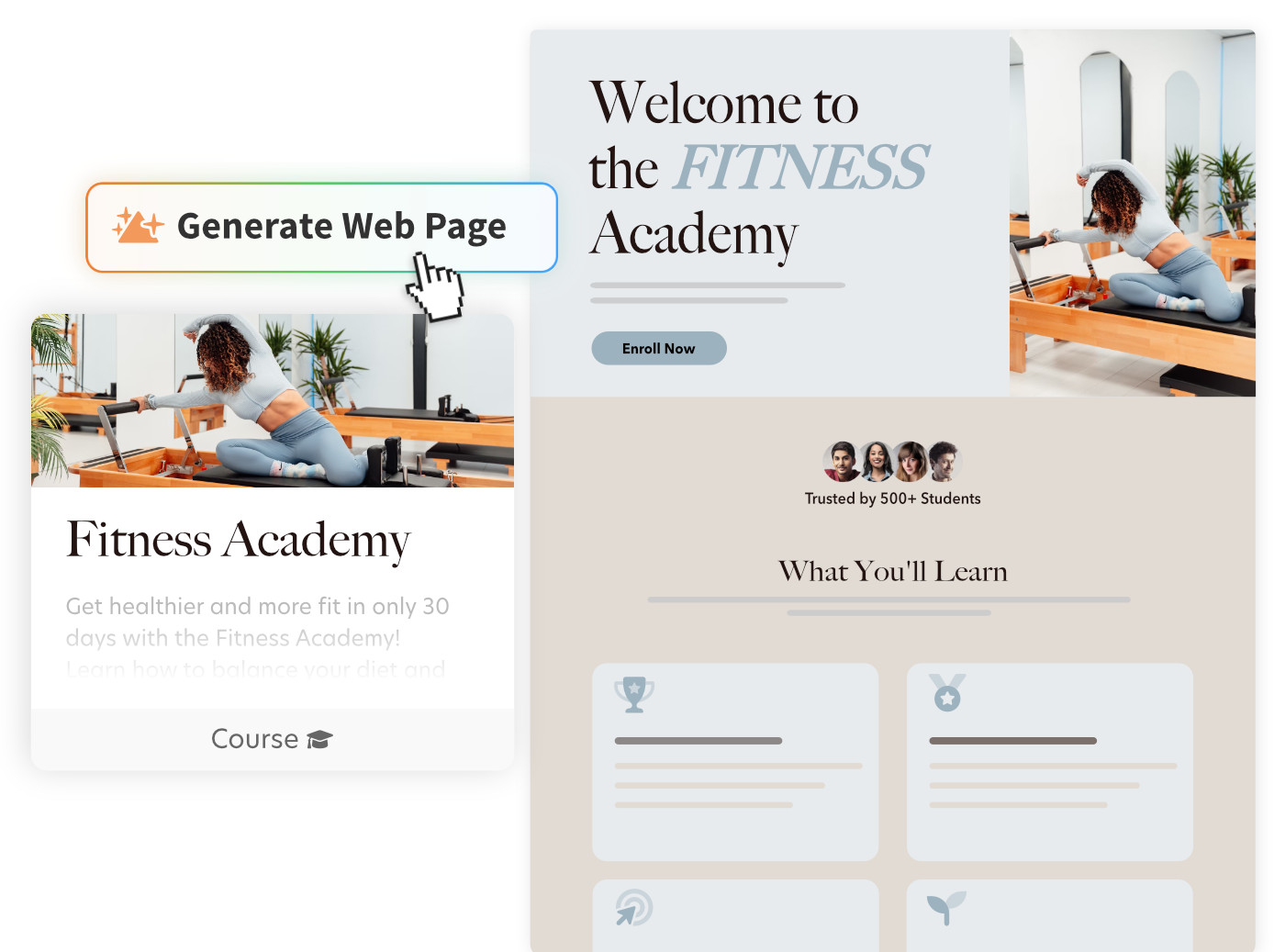
Heights Platform vs Framer: Key Summary
Choose Heights if:
Your site must sell and deliver courses, memberships, coaching, resources, community, student progress, and paid product access.
Heights Platform overview
Heights includes the parts behind the marketing page: checkout, lessons, resources, student accounts, digital products, community, subscriptions, certificates, and analytics.
Choose Framer if:
Your main need is a visually distinctive public website, portfolio, campaign page, or design-led marketing site.
Framer overview
Framer is strongest for visually polished sites, CMS-backed marketing pages, animations, staging, previews, and design collaboration.
Pricing and stack considerations
Framer currently has a Free plan, Basic at $10/month billed yearly, Pro at $30/month billed yearly, and custom Enterprise pricing. That covers the website. It does not replace the cost of a course platform, community tool, checkout, student access, resource delivery, certificates, and analytics. If the site's purpose is to sell courses, the paid-product delivery platform deserves priority.
Compare total stack cost, not only the site builder. A visually stunning site can become expensive if the creator still needs separate subscriptions and automations for every paid-product function. Heights reduces that stack by combining the course business essentials.
What a course creator should build in Heights instead of Framer
Build the offer page, checkout, welcome lesson, course modules, downloads, replay library, community prompts, and student onboarding in Heights. Those are the parts students use after buying.
Keep Framer for highly custom public brand pages, portfolio pages, or design-led SEO pages if they already perform well. Do not make Framer responsible for paid access, course progress, certificates, or student support unless you want to maintain a custom stack around it.
Switching plan from Framer to Heights
Keep Framer pages that are ranking or important for brand storytelling if needed. Move paid offers into Heights, build product pages, configure checkout, create lessons and resources, and link prominently from Framer to the Heights product. If your site is mostly course sales pages, consider consolidating more of it in Heights.
FAQs: Framer alternatives for course creators
Is Heights a design tool like Framer?
No. Heights includes pages, but its strength is creator product delivery and student engagement.
Can I use Framer and Heights together?
Yes. Framer can host public brand pages while Heights hosts paid courses and communities.
When should I choose Heights instead?
Choose Heights when checkout, lessons, access, progress, community, and memberships matter more than custom website design.
Can Heights sell digital products?
Yes. Heights supports digital products, courses, bundles, coaching, and memberships.
Why trust Heights Platform?
Built by creators, informed by 10,000+ creator businesses
Since 2019, Heights Platform has helped more than 10,000 creators in over 100 countries build and grow online knowledge businesses with courses, communities, coaching, and digital products. We are a small, creator-led team that takes pride in giving creators thoughtful, personal service, not simply access to software.
Our team can work directly with you to help build your program in Heights, drawing on what we have learned from helping thousands of creators launch and improve their offers.
We design for both sides of an education business: helping creators grow while giving their students and members a clearer path to apply what they learn and achieve meaningful results.
We run our own courses and community at Creator Climb, where more than 10,000 members learn alongside other creators.
Our experience also extends beyond the platform. On The Creator's Adventure, Heights founder Bryan McAnulty has interviewed nearly 200 creators, educators, and entrepreneurs from around the world, bringing those practical lessons back into how we build Heights and support creator businesses.