Best Alternative to Using Discord for a Membership Community
9 minute readIf you are building a membership community, you have probably considered using Discord to host it.
It is popular, flexible, and familiar to many people, especially in online communities built around gaming and tech. On the surface, it can seem like an easy choice for creators who want a place where members can connect, ask questions, and stay engaged.
But if you are looking for a tool that lets you build, grow and manage every aspect of your membership community, then a simple chat interface may not be enough.
Creative entrepreneurs often need a space where content, conversations, payments, member experience, and business growth can all work together. That is where many creators start to notice the limits of using Discord as the main home for their community.
In this guide, we will look at Discord for hosting a membership site, including what it does well and where it can fall short for membership businesses. Then we will look at why an all-in-one platform like Heights can be a stronger alternative for creators who want to build a more organized, professional, and scalable community and digital product business.
Key limitations of using Discord for membership communities
Before diving deeper, it is important to understand a few practical limitations creators run into when using Discord as the main platform for a membership business.
1. Limited search and content discovery
Discord is built for real-time conversation, not long-term content discovery. As discussions grow, it becomes difficult for members to find past answers, valuable insights, or important resources. This often leads to the same questions being asked repeatedly and reduces the long-term value of your community content.
2. Fast-moving conversations can become messy
Because Discord is centered around live chat, conversations can quickly become fragmented and hard to follow. Important discussions get buried, and new members often struggle to catch up or understand where to start.
3. Moderation requires constant attention
The real-time nature of Discord makes moderation more demanding. Admins need to stay active to manage conversations, prevent spam, and keep discussions organized. As your community grows, this can become time-consuming and difficult to scale.
4. Hidden costs and revenue cuts
While Discord is often seen as “free,” monetization comes with trade-offs. Discord takes a 10% cut of server subscription revenue. On top of that, many communities rely on server boosts to unlock better features, which can cost anywhere from $9.99 to around $60 per month, depending on the level of upgrades needed.
What is Discord?
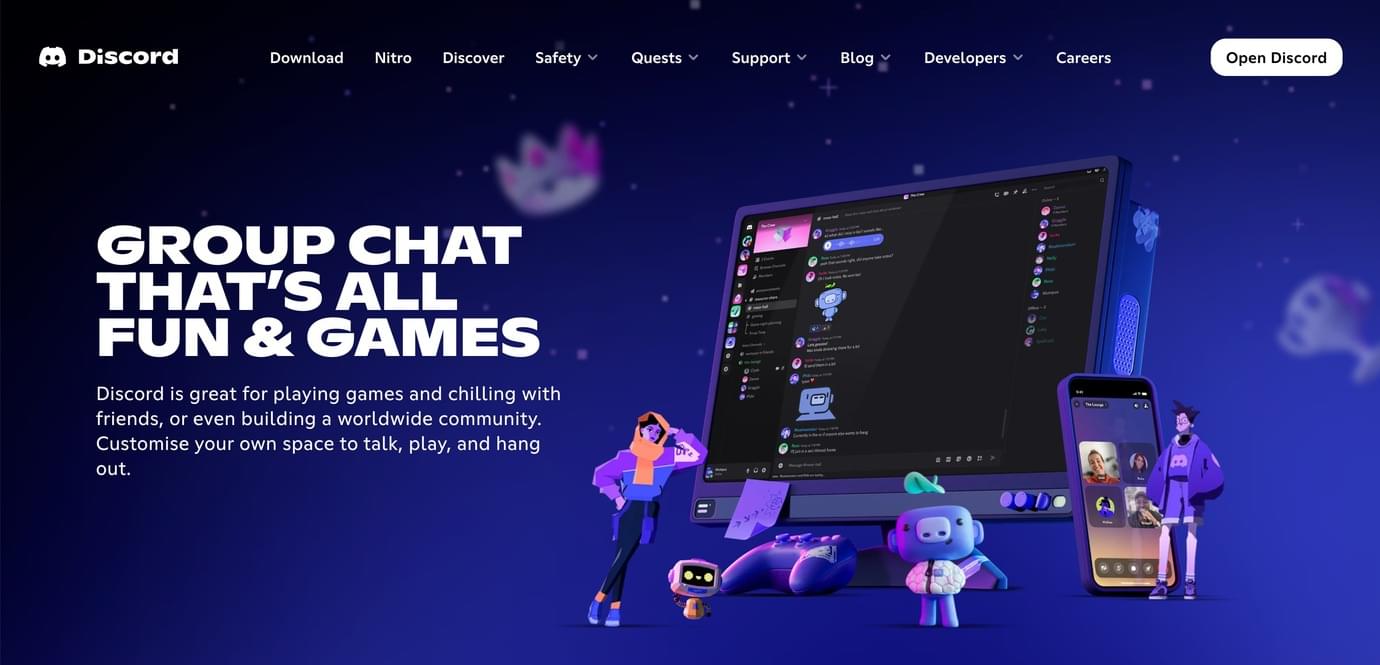
Discord is an online communication platform built around servers, channels, and real-time interaction.
Inside a Discord server, people can join different text and voice channels based on topics, interests, or levels of access. This makes it possible to create community spaces for general discussion, announcements, member support, events, or smaller niche conversations within a larger community.
Originally, Discord became well-known as a platform for gamers. Over time, it expanded into many other use cases, including creator communities, coaching groups, masterminds, membership programs, and online brands.
For creators, Discord can be appealing because it offers a fast and active environment. Members can chat in real time, react to messages, jump into voice calls, and build connections with each other in a way that feels lively and informal.
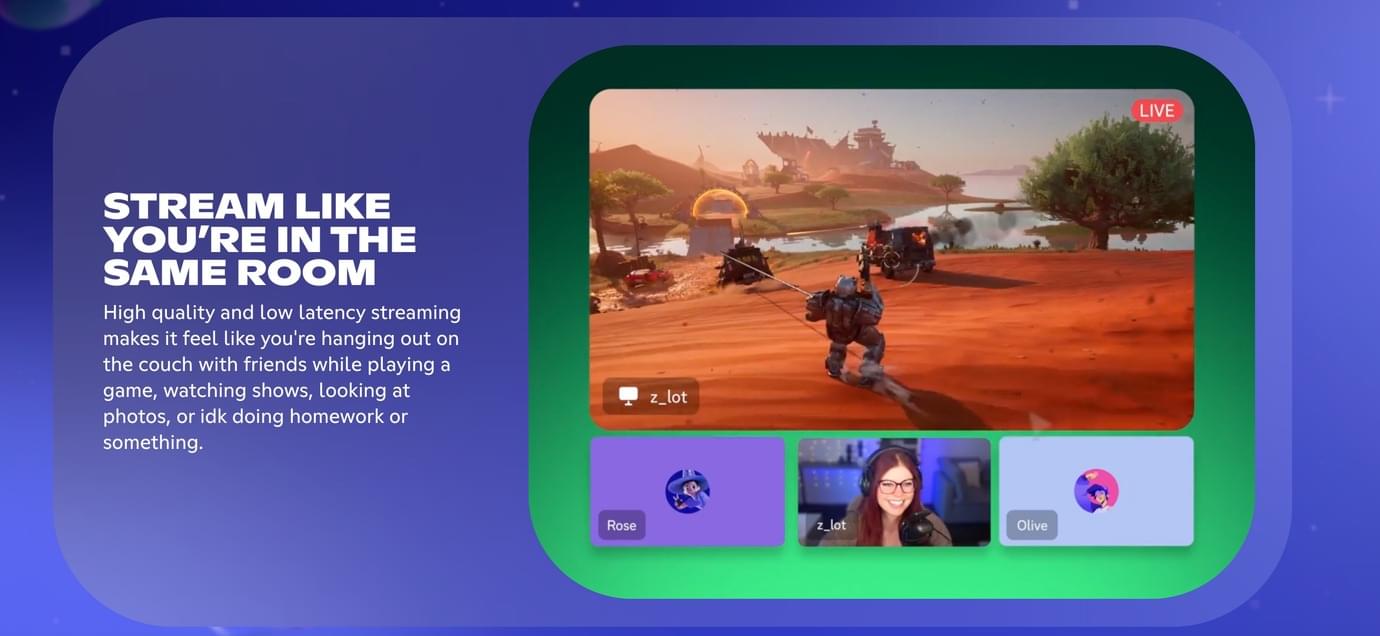
That said, Discord is primarily a communication tool. It was not originally built as a complete platform for running a creator business. So while it can work for community conversations, creators often need to add other tools to manage courses, payments, content delivery, onboarding, and the overall member journey.
That difference matters when you are choosing the best platform for a membership community.
Pros and Cons of Using Discord to Host a Membership Community
Discord can work well for some membership communities, especially when the main goal is fast conversation and ongoing interaction.
It gives creators a place to bring members together in real time through text channels, voice channels, threads, forum channels, roles, and permissions.
Discord also offers server subscriptions, which means some creators can charge members for paid access directly inside Discord and create tier-based memberships with different perks.
Discord also offers server subscriptions, which means some creators can charge members for paid access directly inside Discord and create tier-based memberships with different perks.
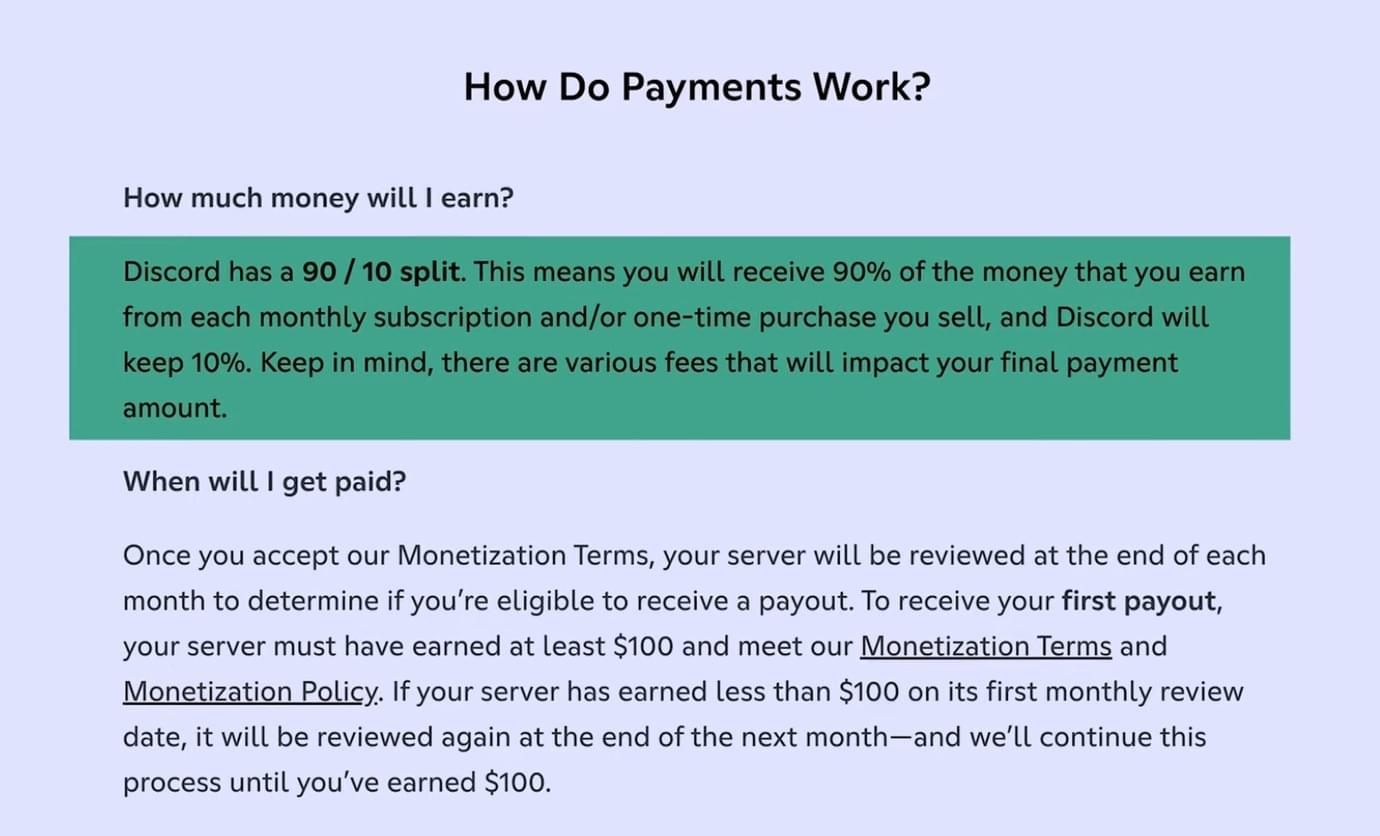
However, Discord takes a 10% cut of subscription revenue, and many communities rely on paid server boosts to unlock additional features, which can add an extra $9.99 to $60+ per month in ongoing costs.
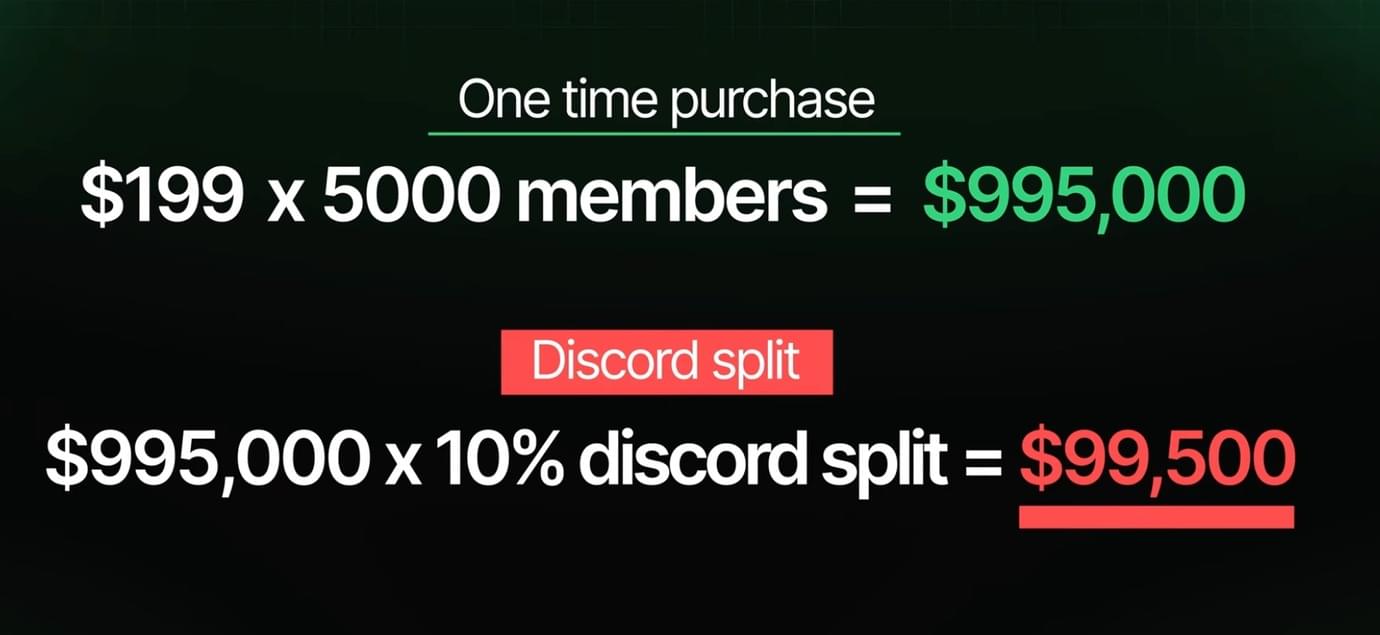
To put this into perspective, imagine you are selling a $199 membership and grow your community to 5,000 members. That is $995,000 in revenue.
With Discord’s 10% fee, you would give up $99,500 of that total. As your community scales, this percentage becomes a significant cost, reducing the overall profitability of your membership business.
One of the main reasons why creators choose Discord for hosting their communities is its familiarity to many online users. A lot of people already know how to join a server, react to messages, jump into voice chat, and take part in casual discussions.
However, Discord can be limiting when the community is part of a larger creator business. As conversations grow, the lack of strong search and structure can make it harder for members to find value from past discussions, which impacts long-term engagement.
While it can handle a large amount of conversation and some monetization, it was not built as a complete platform for delivering the full membership journey in one place.
That means creators will still need other tools for structured content delivery, branded learning experiences, sales pages, email marketing, checkouts, and a more controlled customer journey.
Another limitation for creators is branding. On Discord, your community lives inside Discord’s environment, with Discord’s interface, navigation, and user experience shaping how members interact with your brand.
For some creators, that is perfectly fine. But for others, especially those selling premium memberships, courses, coaching, or business communities, it can feel less professional than having the entire experience inside a platform designed around their business.
This is the key reason many creators eventually start looking for an alternative that brings community, content, and business tools together in one place.
A Better Alternative to Discord for Creators
Discord is primarily a communication tool, while running a membership community usually requires much more than communication alone.
This is where Heights Platform becomes a better alternative to Discord.
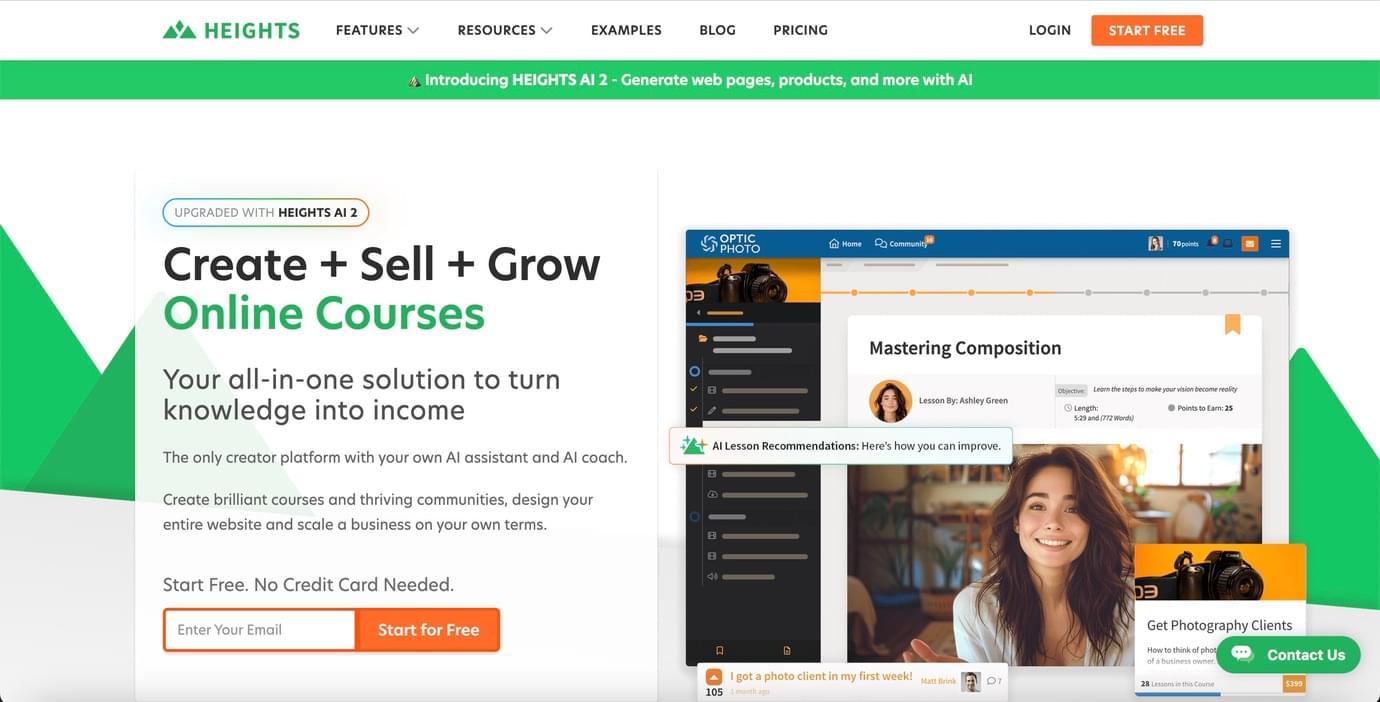
One of the biggest advantages of Heights is that it is an all-in-one platform. That means you can do far more than create a community for your members.
You can build online courses, sell membership sites, create your website, offer digital products, host events, and bring everything together inside one connected experience.
Instead of stitching together multiple tools, you can run your community as part of the same platform that powers the rest of your business.
That difference matters because a membership community usually works best when it is closely connected to the products and experiences you offer. In Heights, the community is directly linked to your program, so members can access it alongside the courses, digital products, events, or memberships they have purchased.
Rather than sending people out to a separate platform just for chatting, Heights keeps the experience in one place, making it easier for members to stay engaged and easier for creators to guide the full customer journey.
With Heights, the first thing your customers see when they log into your program is a customizable dashboard, which can be shaped around the parts of your business you want to highlight.
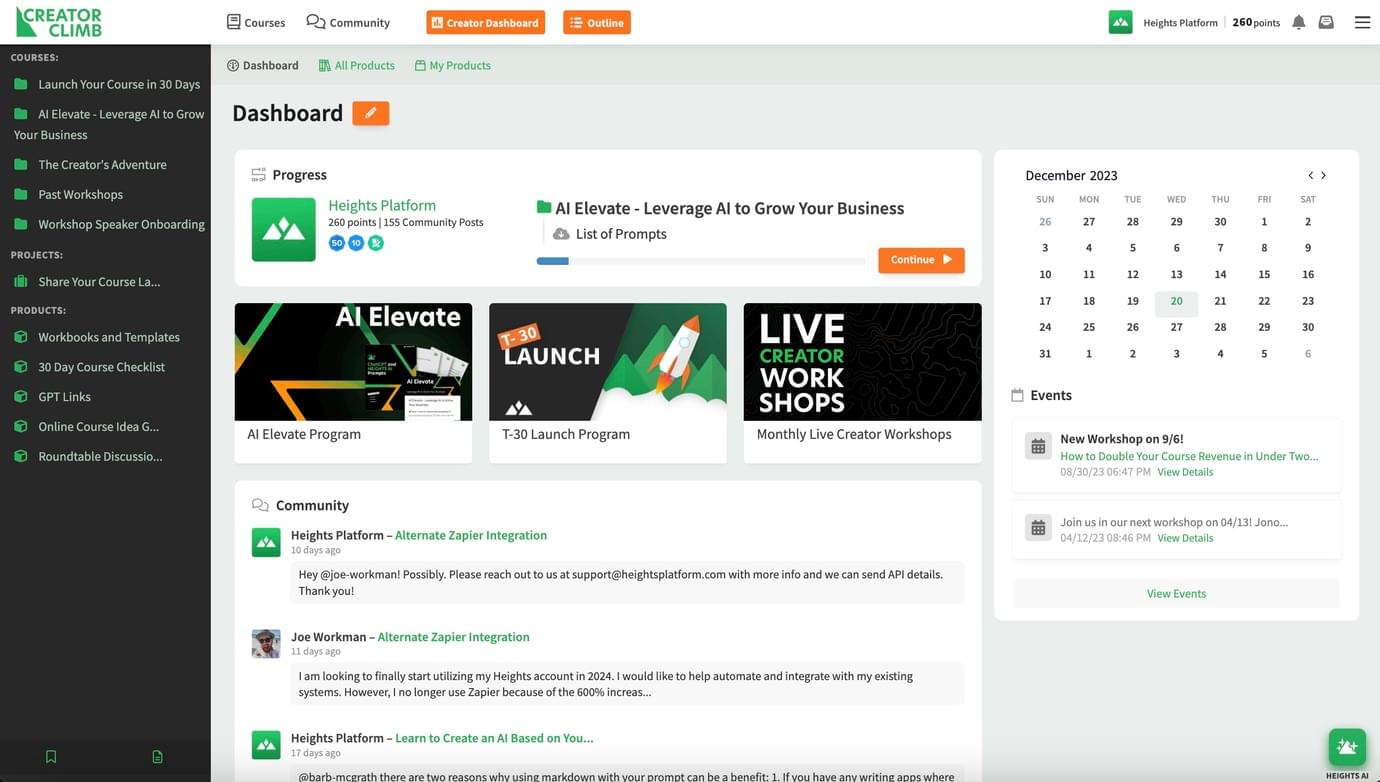
This gives creators more control over what members see first, which is very different from a tool like Discord, where the experience is built mainly around channels and ongoing chat, and branding is not white-label.
Inside the community itself, Heights gives creators a clean way to organize conversations through channels and channel groups. Channels are dedicated spaces where you and your members can post around specific topics, while channel groups act like folders that help organize multiple channels into a more structured layout.
This makes it easier to build a community that feels intuitive to navigate, especially as it grows.
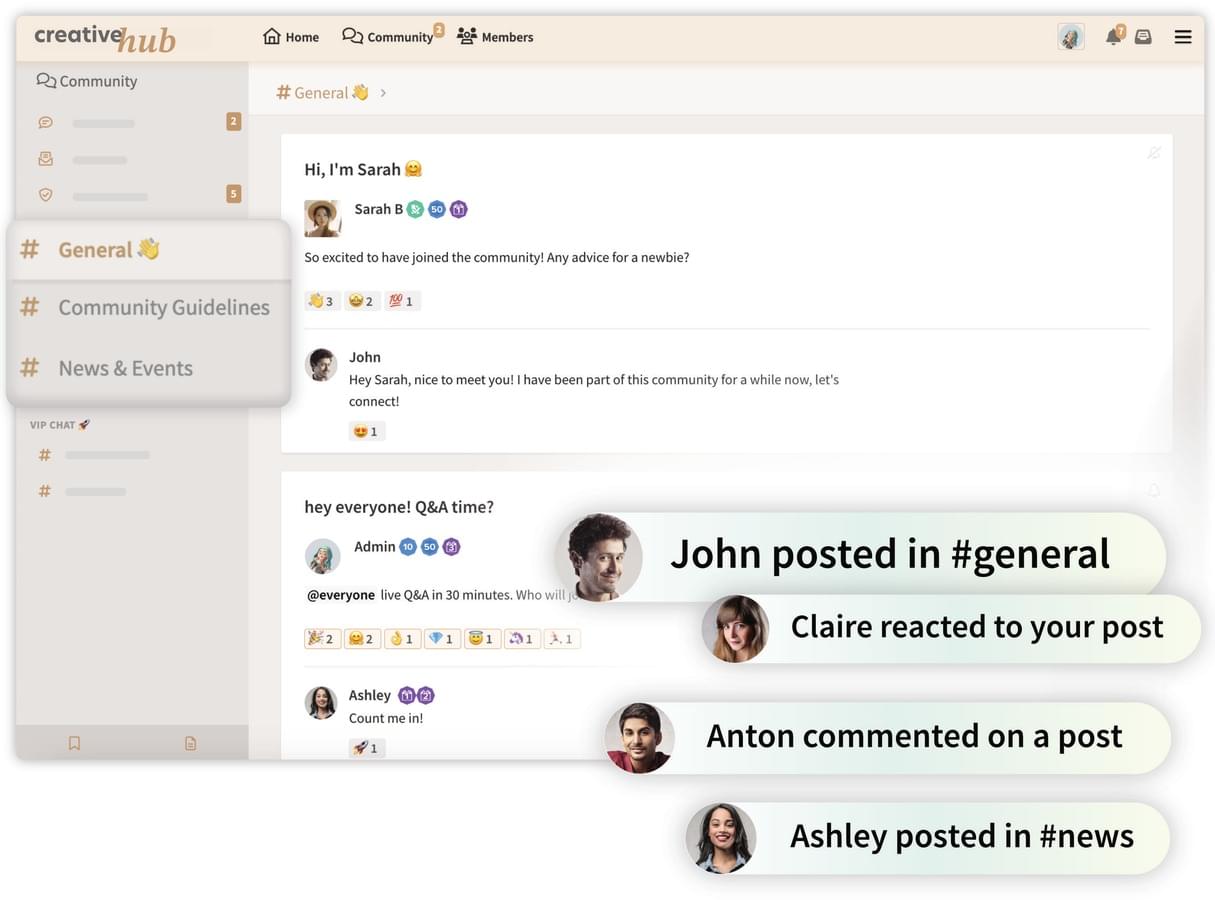
Heights also gives creators more control over how content is managed and delivered to your customers. You can hide certain channels or entire channel groups, and you can sell access to specific parts of the community separately from the rest (the same can be done with products such as courses, digital downloads, and offers).
This opens up much more flexibility for creators who want to build premium spaces, VIP groups, topic-based memberships, or layered offers.
For example, you might have a free community area for general engagement and a paid set of channels for members who want deeper access, more advanced discussions, or exclusive support.
Moderation is another area where Heights is designed with creators and community managers in mind. Admins can approve or block posts, adjust moderation settings, and lock entire channels or individual posts so that only admins can publish or reply, and you even get AI support with moderation.
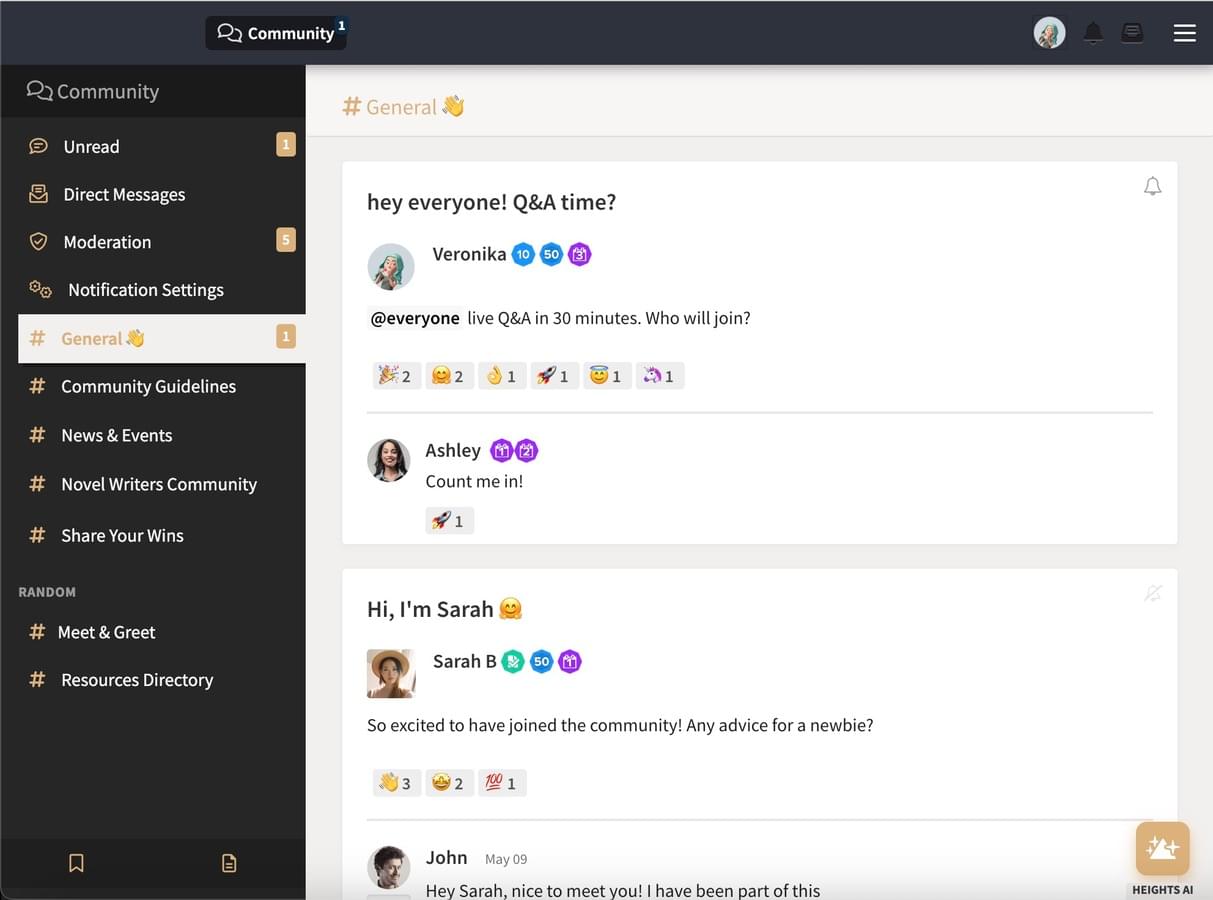
Another major difference is branding. With Heights, your community lives inside your own branded program. You can use your own domain, logo, and style, and create a more fully whitelabeled experience. For creators selling premium offers, that can make a big difference in how professional and cohesive the experience feels.
Heights also goes beyond what many creators expect from a community platform by including features that support engagement and delivery in more advanced ways. For example, creators can use live streaming and meeting rooms directly inside their program, which means they can host live sessions, group calls, and community events without relying on separate webinar or video call tools.
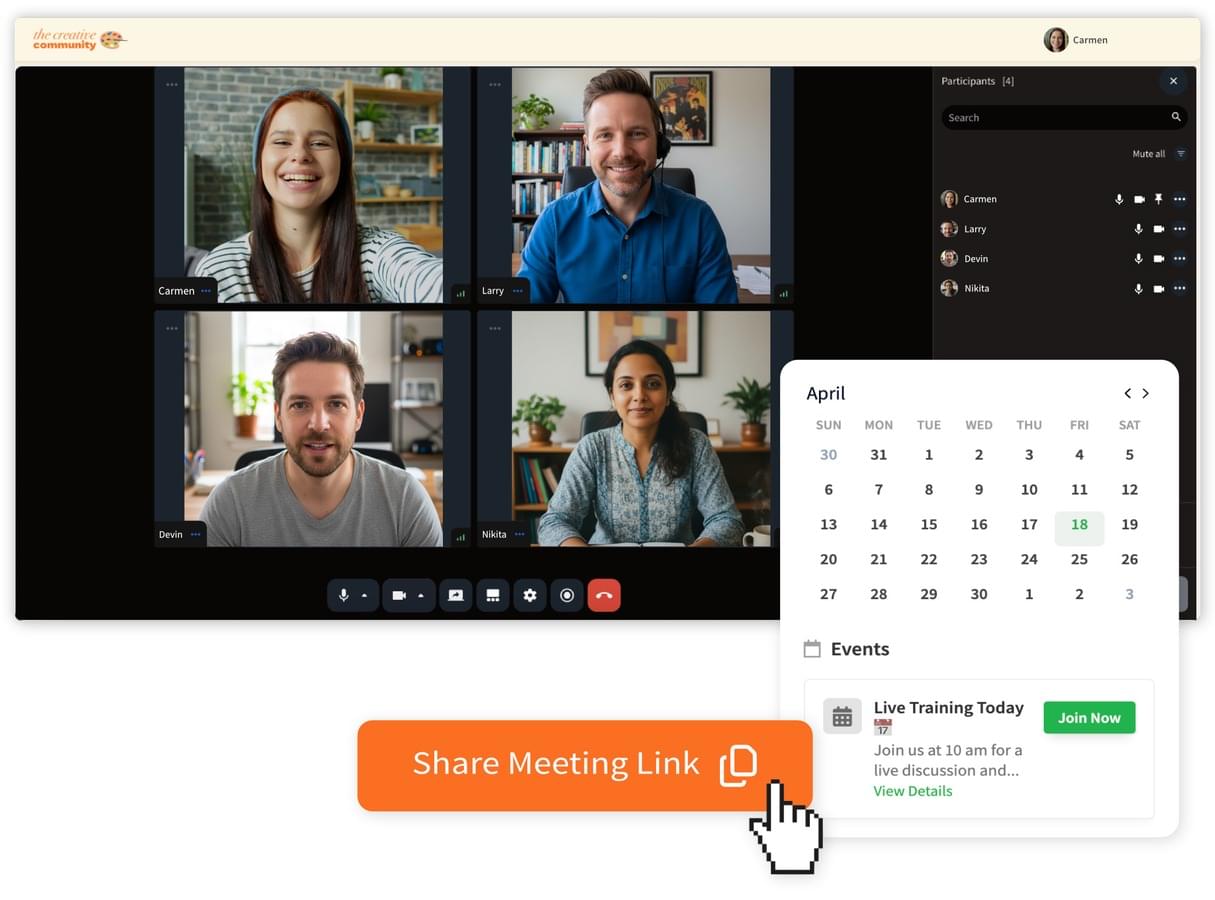
This creates an even more connected experience for members and removes more of the friction that comes from trying to manage a business across too many platforms.
In simple terms, Discord can be a good place for conversation. Heights is a better fit for creators who want conversation, content, products, branding, and business tools to work together in one place.
Feature Comparison Table: Heights Platform vs Discord
| Features | Discord | Heights Platform |
|---|---|---|
| Community | Yes | Yes |
| Live meetings | Yes | Yes |
| Paid / scheduled webinars | No | Yes |
| Desktop app | Yes | Yes |
| Paid memberships | Limited | Yes |
| Create online courses | No | Yes |
| Sell digital products | No | Yes |
| Instant chat | Yes | No |
| White-label branding | No | Yes |
| AI community moderation | No | Yes |
| Private / Public channels | Yes | Yes |
| Public posts indexable by Google | No | Yes |
| Bundle community with offers | No | Yes |
| Website builder & marketing tools | No | Yes |
| Integrated payments / checkout | Limited | Yes |
| Structured content (courses + resources) | No | Yes |
| Custom domain | No | Yes |
| Audience ownership (email & CRM) | No | Yes |
| Price | Free + 10% fee on subscriptions + optional boosts ($9.99–$60+/month) |
From $19/month |
How to Create a Membership Community Inside Heights
Creating a membership community inside Heights is flexible because the community can be connected directly to the products and offers you sell, or be a standalone product.
In Heights, an offer is a collection of courses, digital products, projects, and community spaces that can be sold together using one-time, installment, or subscription pricing. This gives creators a simple way to build different membership experiences, create pricing tiers, and decide exactly which parts of the program each customer can access.
This is especially useful if you want to do more than open one general discussion area for everyone.
For example, you may want one membership tier to include a course and a private community channel, while a higher tier includes extra products, additional discussion spaces, or coaching. Heights makes that possible by allowing you to add the same products, projects, and community areas to multiple offers.
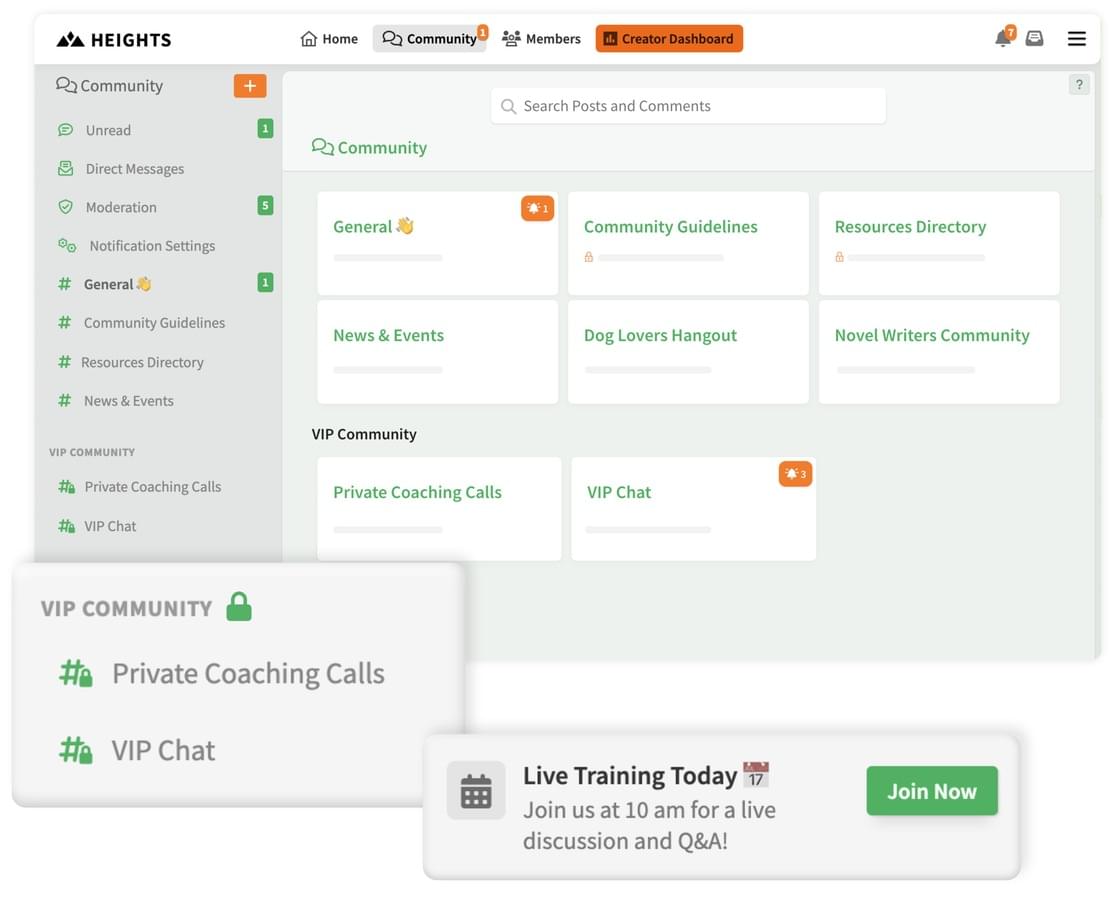
This means your community does not have to stand on its own as a separate experience (although it can if that is what you want!). Instead, it can be packaged together with the rest of your membership content in a way that feels connected and intentional.
That structure gives creators much more control over visibility and access. If you want certain community channels to remain private and only be available to members who bought a specific offer, you can do that. If you want to create several membership tiers with different community access, you can do that too.
Another helpful detail is that offers can support long-term membership access. By default, students only receive the products included in the offer at the time of purchase.
But if you enable the "Make Membership" option, you can automatically grant access to future products added to that offer. This is valuable if you are building an ongoing membership where new content, community spaces, or resources will be added over time.
Creating a membership community inside Heights is not just about opening channels and inviting people in. It is about building a complete member experience with community, courses, live streaming and digital products.
Plus, Heights Platform doesn't charge any transaction fees, nor it takes a percentage of your earnings: everything you earn is 100% yours to keep!
That is one of the biggest differences between Heights and a tool like Discord. In Heights, the community is not a disconnected add-on. It is part of the product itself.
Create Your Membership CommunityPros of Hosting Your Membership Community in Heights vs Discord
The biggest advantage of hosting your membership community in Heights instead of Discord is that Heights is built for creators who are running a business, not just managing conversations.
With Discord, the community lives separately from your courses, digital products, payments, and website.
Even if the conversations are active, the overall member experience can feel disconnected. Heights brings everything together in one place, so your community sits directly alongside the products you sell. That makes the experience simpler for members and easier to manage as a creator.
Heights also gives you more control over how your community is structured and sold. You can create private channels, organize them into channel groups, and include specific community spaces inside different offers.
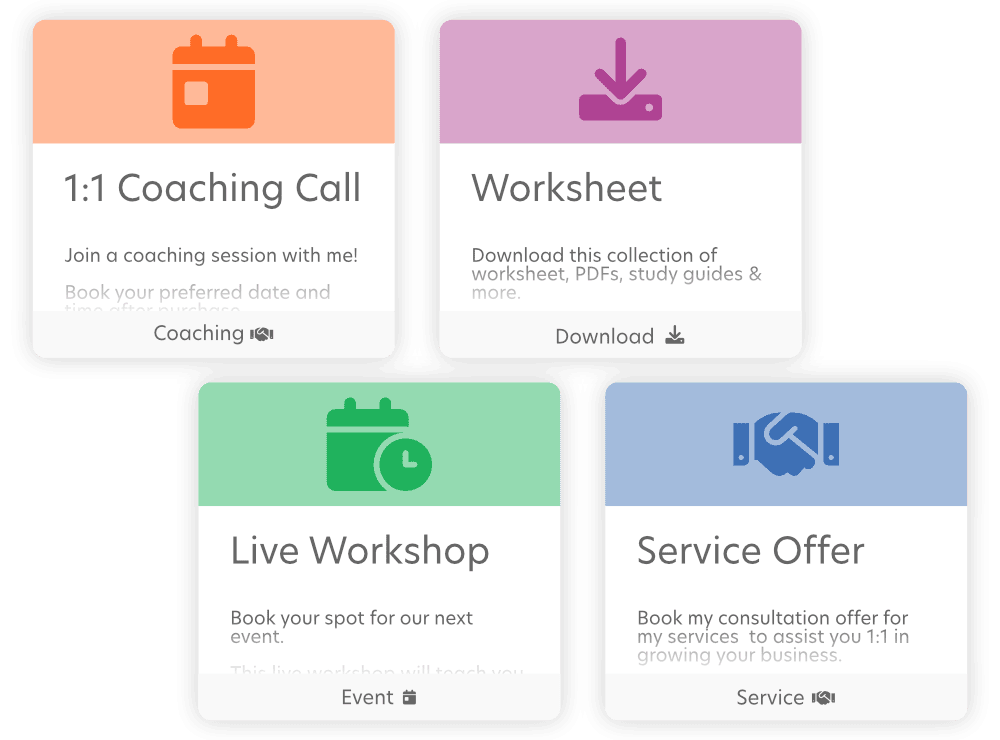
In Heights, your community is part of your own branded program, with your own domain and a more polished member experience. In Discord, your community exists inside Discord’s environment, which can feel less aligned with a premium creator business.
Heights is also a stronger fit for creators who want their community to support growth.
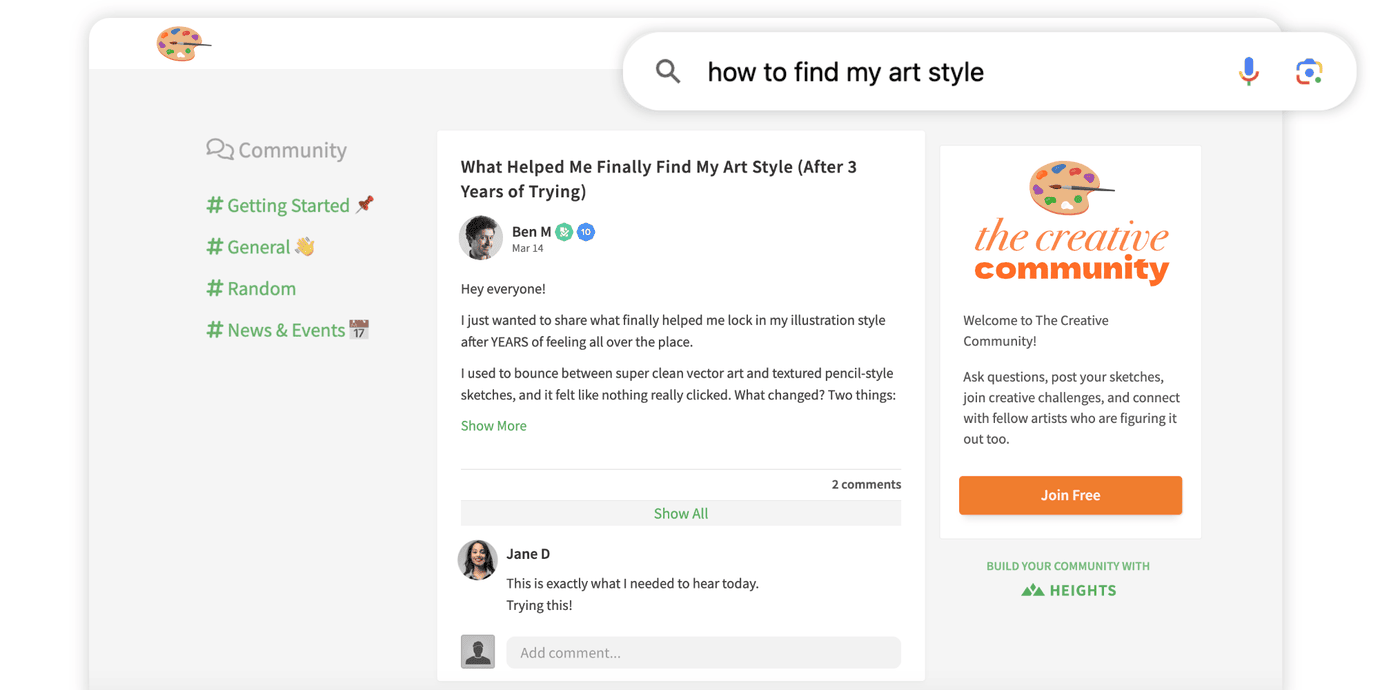
One feature in Heights allows creators to use their community as a lead generation tool: Public community!
With this feature, community channels that are free can be automatically set to public, meaning that search engines like Google can index community posts.
This means that people can discover your business through search engines, with a simple Google search, just as they would find a blog or web page.
Start Your Membership Community With Heights Platform
Discord can be a useful tool for building conversation, especially if your audience already likes fast-paced chat and casual interaction. But for creators building a membership business, conversation is only one part of the experience.
You also need a clear way to deliver content, organize access, manage pricing, guide members through your offers, and create a branded space that feels connected to your business. That is where Discord often starts to feel limited, and where Heights becomes a much stronger alternative.
With Heights, your community is not separated from the rest of your business. It works alongside your courses, digital products, memberships, events, and website, giving your members one place to learn, connect, and keep moving forward.
Build a membership community that feels organized, professional, and connected to the products you sell by starting your free trial account (no credit card needed!)
Create Your Membership Community

