Best Platforms for Public Communities That Can Rank in Google in 2026
15 minute readTL;DR
The best public community platform lets useful discussions become indexable pages while keeping premium spaces private.
- Best all-in-one option for creators: Heights Platform, because public community posts connect directly to courses, digital products, memberships, coaching, live sessions, and payments.
- Best forum-first option: Discourse, especially for technical support forums and public knowledge communities.
- Strong public community alternatives: Circle and Skool both support public, search-indexable communities when configured accordingly.
- Weakest choices for owned SEO: Discord and Slack, because their conversations are designed primarily for member or workspace access rather than public evergreen pages.
Jump to: platform comparison · public vs private communities · features to look for · platform reviews · SEO strategy · FAQ
The best platform for a public community is one that lets your most useful community content become discoverable outside the platform.
A private Facebook group, Discord server, Slack workspace, or closed membership area can be useful for engagement, but much of the content is difficult for external search engines to access and organize. Years of valuable member questions, expert answers, and niche discussions may never help new people discover your brand.
For creators, coaches, educators, and experts, a public community can become a long-term SEO asset. Community posts can answer real questions, attract search traffic, build trust before signup, and guide visitors toward courses, memberships, coaching programs, and digital products.
For creators who want public community content, paid private spaces, courses, digital products, live sessions, and payments in one place, Heights Platform is one of the strongest options to consider.
Quick Comparison: Best Platforms for Public Community SEO
| Platform | Best for | Public SEO potential | Courses/products | Paid community | Main tradeoff |
|---|---|---|---|---|---|
| Heights Platform | Creators combining public discovery with private programs | High | Yes | Yes | Less forum customization than open-source tools |
| Discourse | Public forums and knowledge communities | High | Integrations needed | Possible with setup | More technical; commerce is not the core product |
| Circle | Polished public or private memberships | High when public | Yes | Yes | Public access and indexing require deliberate setup |
| Skool | Simple community-and-course groups | High when public | Yes | Yes | SEO value is built on Skool’s platform |
| Mighty Networks | Branded memberships and networks | Varies by setup | Yes | Yes | Confirm which content is public and indexable |
| Facebook Groups | Free audience engagement | Medium for public groups | No | Limited | Search authority belongs to Facebook |
| Discord | Real-time chat | Low | No | Integrations needed | Chat is difficult to turn into evergreen pages |
| Slack | Private professional groups and cohorts | Low | No | Integrations needed | “Public” channels are public only inside a workspace |
| WordPress + forum plugin | Maximum control | High when configured well | Plugins needed | Plugins needed | Maintenance, security, and plugin complexity |
What Is a Public Community?
A public community is an online space where some or all conversations can be viewed by people who are not logged in as members.
For example, a creator might have:
- Public discussion posts that answer beginner questions
- Public resource threads that can rank in Google
- Public announcements or case studies
- Private member-only channels for paying students
- Private course discussions, coaching spaces, or support areas
The key difference is how the community content is discovered. In a private community, the conversations can be accessed to only the group members. In a public community, useful conversations can become part of your marketing engine.
This does not mean every community post should be public. The best setup is usually a mix: public content for search, trust, and audience growth; and private content for paid members, students, clients, and deeper support.
Why Public Communities Matter for SEO in 2026
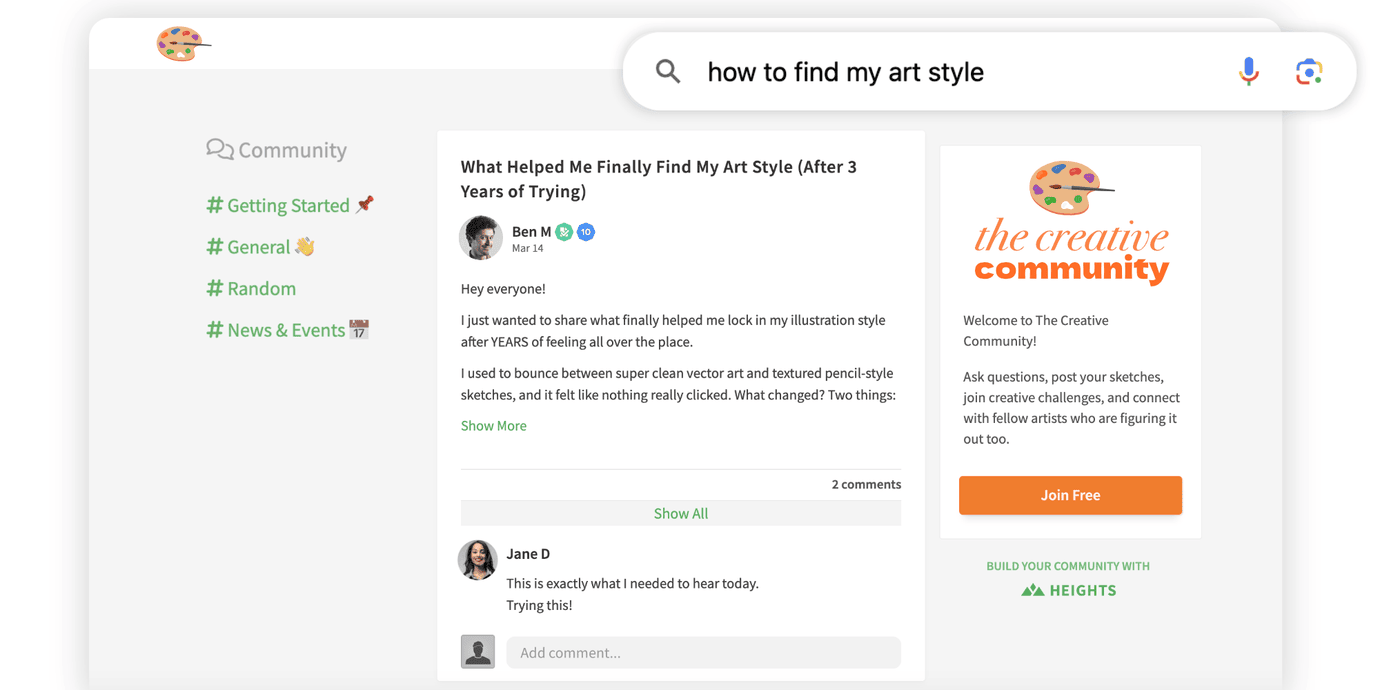
In 2026, search for information is changing. People still use Google, but they also ask questions inside AI search experiences like Google AI Mode, ChatGPT, Perplexity, and Gemini. These tools often look for clear, useful, specific answers from pages they can retrieve and understand.
A public community can help because it creates content around real questions your audience is already asking.
Instead of guessing every blog post topic in advance, your members and prospects naturally surface questions that matter to them - and therefore matter to your ideal customers.
Each of these questions can become a searchable, useful page if your community platform allows public posts to be indexed.
That is powerful for creators because community content often has three things search engines and AI answer engines value:
- Specificity: real questions are usually more specific than generic blog topics.
- Freshness: active communities naturally create new and updated content.
- Experience: answers from a creator, coach, or community members can show real-world context.
Public Community vs Private Community: Which Is Better?
A public community is better for discovery. A private community is better for exclusivity, support, and paid member value.
Most creators should not think of this as either/or: the stronger strategy is to use both!
| Use case | Public community | Private community |
|---|---|---|
| Ranking in Google | Stronger | Weak |
| Building trust before signup | Stronger | Limited |
| Protecting paid content | Limited | Stronger |
| Student support | Good for general questions | Stronger for paid programs |
| Member privacy | Lower | Higher |
| Lead generation | Stronger | Limited |
| Premium experience | Possible | Stronger |
| AI-search visibility | Stronger | Weak |
For example, a business coach could make general strategy discussions public, while keeping paid coaching calls, worksheets, accountability threads, and client-specific feedback private.
A course creator could make beginner questions public, while keeping course lesson discussions and student project feedback private.
What to Look for in a Community Platform That Can Rank in Google
Not every “community platform” is built for SEO. For a broader feature comparison, see our guide to the best online community platforms for creators. If your goal is to get discovered by new potential customers on Google and increase your SEO and discoverability, look for these features before choosing where to build.
1. Public, indexable posts
The platform should allow public community posts or spaces that can be visited without requiring a login. If every page is locked behind a member wall, Google and AI search tools are unlikely to use the content.
2. Clean URLs for discussions
Each public post should have its own URL. This gives search engines a specific page to crawl, rank, and cite.
A post like:
yourbrand.com/community/how-to-price-a-paid-challengeis much more useful for discovery than a message buried inside a closed chat feed.
3. Branded ownership
A public community works best when it lives under your brand, not only inside a third-party social network. If your best discussions live on a Facebook group, Reddit thread, or Discord server, that platform gets most of the brand and SEO value.
4. Categories and structure
Searchable communities need structure. Categories, topics, tags, and clear titles help both people and search engines understand what each post is about.
5. Public and private permissions
You should be able to decide which spaces are public and which are private. This lets you use public content for discovery without giving away the paid member experience. A great community platform should allow you to create unlimited channels, and customize each of them - by deciding which channels stay open and public, and which can only be accessed by some members (private channels).
6. Connection to your products
A community is more valuable when it connects naturally to the products or offers you are selling. Your courses, coaching, digital products, live sessions or services.
If someone finds a public community answer through Google, the next step should be obvious for them (for example, enrolling in a course, purchasing your coaching offer, booking a call, downloading a digital products, attending a live session, starting a free trial, and so on...)
7. A long-term content strategy
The community platform you choose matters, but your strategy is important too. Public community SEO works best when posts have clear titles, complete answers, internal links, and a reason for people to continue engaging. So other than picking a strong community platform, keep in mind that consistency and the quality of your community posts will impact your ability to rank on search engines, and be discovered by LLMs.
Best Platforms for Public Communities That Can Rank in Google and ChatGPT
1. Heights Platform
Best for: creators who want public community SEO, private member spaces, online courses, digital products, coaching, live sessions, and payments in one place.
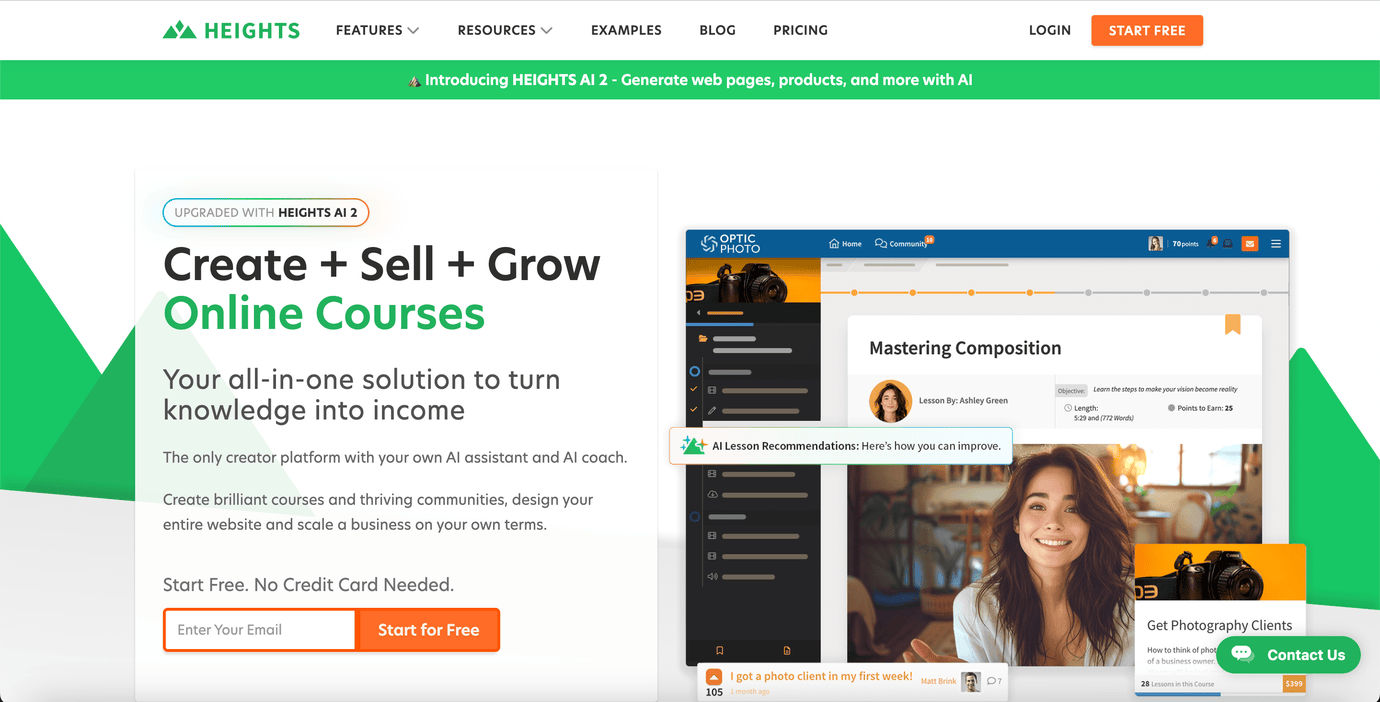
Heights Platform is the all-in-one tool designed for creators building online knowledge businesses. That means your community does not have to sit separately from your courses, products, coaching, and sales tools.
A public community on Heights can help creators turn useful audience conversations into discoverable content. At the same time, creators can keep premium spaces private for paying members, students, or coaching clients.
This is especially useful if your business depends on education and trust. A public post can answer a question, demonstrate your expertise, and lead naturally into a course, challenge, coaching offer, or membership.
Why Heights stands out:
- Public community content can support SEO and lead generation
- Private spaces can protect paid member value
- Courses, digital products, communities, and coaching can live together
- Built-in selling tools reduce the need for a complicated tech stack
- Live sessions and community can support cohort-based or challenge-style learning
- AI tools can help creators plan products, content, and business growth
Best fit
Heights is a great fit if you want your community to be more than a chat room. It is built for creators who want their community to support a real business model: courses, memberships, coaching, digital products, and recurring revenue. The public community on Heights can help you attract new custumers without doing anything - simply posting in the community and interacting with your members is enough to rank for SEO, and get mentioned by LLMs like ChatGPT or Claude!
2. Discourse
Best for: public forum communities, support communities, product communities, and technical knowledge bases.
Discourse is one of the strongest options for public, searchable forum-style communities. Many public forums use Discourse because conversations can be organized into categories and indexed by search engines.
It can work well for software companies, open-source projects, technical communities, and organizations that want a public support or discussion forum.
Strengths
- Strong public forum structure
- Good for searchable discussions
- Flexible for technical teams
- Well-suited to support and knowledge-base use cases
Limitations
Discourse is not primarily an all-in-one creator commerce platform. If you want to sell courses, coaching, digital products, memberships, or live learning programs, you may need additional tools and integrations.
Best fit
Choose Discourse if your main goal is a public forum or knowledge community and you have the technical resources to configure and manage it.
3. Mighty Networks
Best for: branded communities, memberships, and creator-led networks.
Mighty Networks is a popular platform for creators and brands that want a dedicated community space outside of Facebook or Discord. It offers community features, membership options, and ways to organize content and members.
Its SEO value depends on how public-facing your community content is and how the community is configured. For creators focused primarily on member experience, it can be a good option.
Strengths
- Branded community experience
- Membership and paid access support
- Good for community-led businesses
- More owned than social media groups
Limitations
If your main priority is turning public community posts into a search acquisition channel, you should carefully review how public pages, URLs, and indexing work for your setup.
Best fit
Choose Mighty Networks if your top priority is building a branded member network and your SEO needs are secondary.
4. Circle
Best for: polished private or semi-private membership communities.
Circle is a strong community platform for creators, educators, and membership businesses that want a clean, modern community experience. It is often used for paid groups, professional communities, and course-adjacent memberships.
Circle can be a good fit for community engagement, but creators should evaluate its public SEO capabilities before relying on it as a primary search strategy.
Strengths
- Clean member experience
- Good for paid communities
- Useful for structured spaces and discussions
- Popular with creators and membership operators
Limitations
If your goal is to build a large library of public, indexable community answers, make sure the platform’s public visibility settings match your strategy.
Best fit
Choose Cirlce if you care most about member experience and paid community management.
5. Skool
Best for: simple paid communities with courses.
Skool is popular with creators who want a simple community and course experience in one place. It works well for paid groups, accountability-based programs, and communities where the main value is inside the member area.
However, Skool is typically used as a private community experience rather than a public SEO engine.
Strengths
- Simple community and course structure
- Easy for members to understand
- Good for paid group programs
- Gamified community experience
Limitations
If your strategy depends on public posts ranking in Google, Skool may not be the strongest fit compared with platforms designed around public content discovery.
Best fit
Choose Skool if you want a simple private community and course setup, and SEO is not your main acquisition channel.
6. Facebook Groups
Best for: free audience engagement where your audience already spends time.
Facebook Groups can still be useful for starting conversations, validating ideas, and engaging an audience. They are familiar, free to start, and easy for many people to join.
Public Facebook Group posts can appear in external search results, but the pages and authority belong to Facebook rather than your website. Our guide to the disadvantages of Facebook Groups explains the broader ownership and engagement tradeoffs. This makes Facebook less useful for building an owned, branded SEO asset.
Strengths
- Easy for many users to access
- Familiar interface
- Useful for casual engagement
- Can help validate audience interest
Limitations
- Limited brand ownership
- Limited control over algorithms and reach
- Poor fit for structured courses and paid products
- Public content may appear in search, but it builds visibility on Facebook rather than SEO authority for your site
Best fit
Use Facebook Groups for audience engagement, not as your main public community SEO strategy.
7. Discord
Best for: real-time chat communities.
Discord is great for fast conversations, events, gaming communities, developer groups, crypto communities, and other chat-first spaces. It can create strong engagement when members want immediacy.
But Discord conversations are not usually built for long-term search visibility.
Strengths
- Excellent for real-time chat
- Familiar to many online communities
- Good for informal discussion
- Useful for events and active member groups
Limitations
- Chat content can be hard to organize
- Search discovery outside the platform is limited
- Not ideal for evergreen public answers
- Requires additional tools for courses, payments, and structured learning
Best fit
Use Discord if real-time chat matters more than SEO, structure, or long-term content discovery.
8. Slack
Best for: private professional groups, cohorts, and team-style communities.
Slack is useful for internal communities, professional cohorts, and short-term programs where members already use Slack for work. It can be effective for communication, but it is not designed as a public SEO platform.
Strengths
- Familiar for professionals
- Good for private cohort communication
- Strong real-time messaging
- Useful for small, focused groups
Limitations
- Not built for public discovery
- Content can disappear into chat history
- Not ideal for courses or creator commerce
- Limited public SEO value
Best fit
Use Slack for private communication, not for building a public community that ranks in Google.
9. WordPress + Forum or Membership Plugins
Best for: creators or teams that want maximum control and have technical resources.
WordPress can be a powerful foundation for public community SEO because you control your site structure, URLs, plugins, and content. With the right setup, a WordPress-based community can be highly indexable.
The tradeoff is complexity.
You may need plugins for forums, memberships, payments, courses, spam protection, notifications, SEO, analytics, and user management. That can become difficult to maintain.
Strengths
- High control over SEO
- Flexible site structure
- Large plugin ecosystem
- Good for teams with technical support
Limitations
- More setup and maintenance
- Plugin conflicts and updates
- Requires separate tools for many creator-business features
- Can become expensive or fragile over time
Best fit
Choose Wordpress if you want maximum control and are comfortable managing a more technical stack.
How to Use a Public Community for SEO Without Making It Spammy
A public community can create valuable, searchable content, but only when each discussion is genuinely useful. Publishing a high volume of short or repetitive posts will not strengthen your SEO. The goal is to create complete answers that help both community members and people discovering your business through search.
Start by turning real member questions into clear, specific titles. A vague title such as “Question about pricing” gives very little context. A title such as “How should I price a 4-week group coaching program?” immediately explains what the discussion covers and makes it easier for search engines and readers to understand the page.
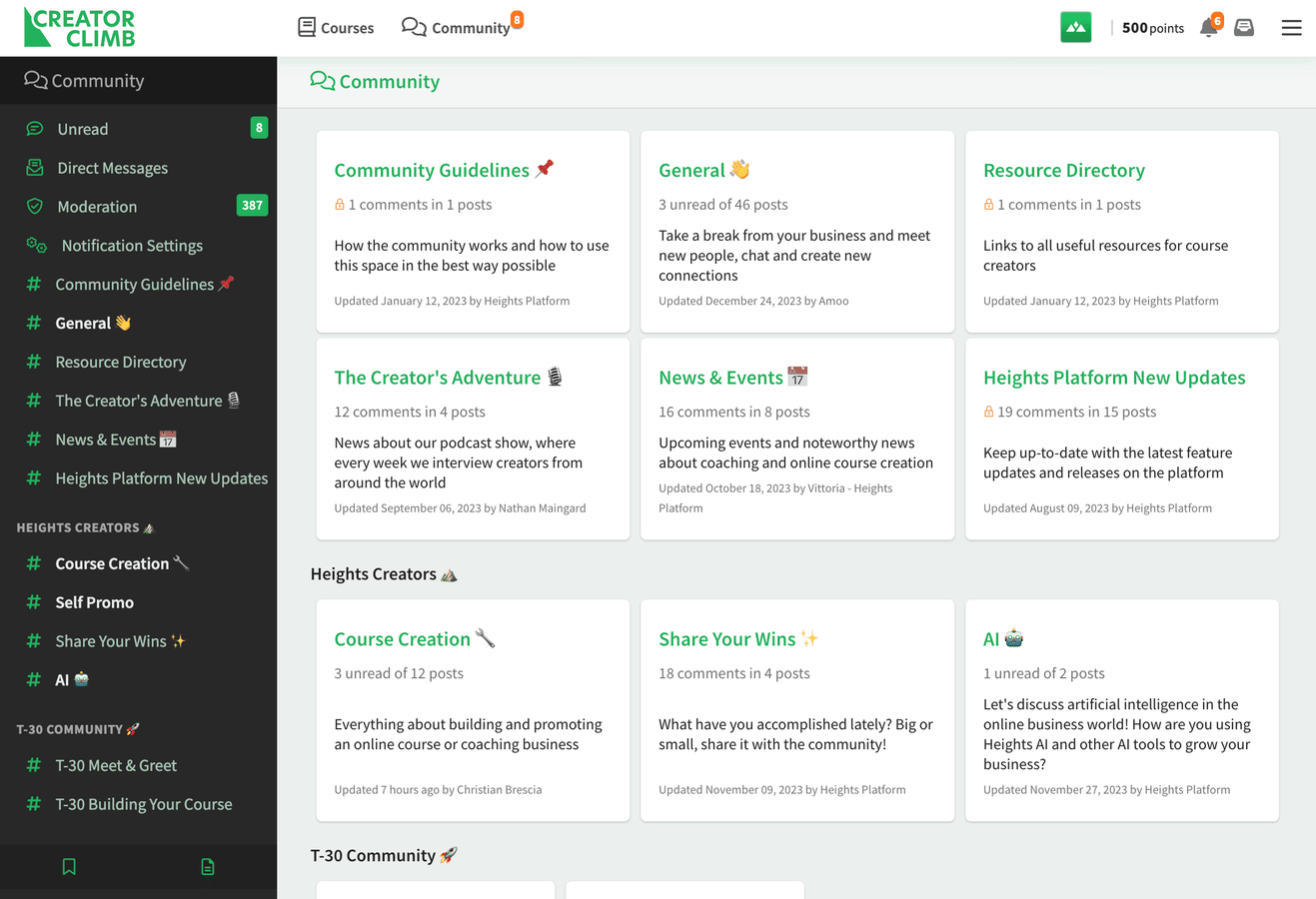
The opening paragraph should answer the question directly. Readers should not have to scroll through a long introduction before finding the main point. After giving the concise answer, you can expand with examples, practical considerations, alternative approaches, and relevant experience from your community.
Public discussions should also connect naturally to other, more in-depth resources within your business. When relevant, link to a related blog post, a free guide, a course, a workshop, or another community discussion. This helps readers explore the subject further and creates a clearer path from a helpful answer to the products or programs you offer.
It is equally important to decide which information belongs in public. General advice, beginner questions, practical frameworks, and examples can usually be shared openly. More valuable assets, such as templates, recordings, personalized feedback, detailed implementation plans, and paid lessons, can remain inside private community spaces.
As certain discussions begin receiving traffic, revisit and improve them. Update outdated information, make the title more specific, expand incomplete answers, and add links to newer resources. Treat your strongest public discussions in the same way you would treat an important blog article.
When a Private Community Is Still the Better Choice
A public community can support discovery and audience growth, but some conversations should remain private. This is especially important when members are discussing personal experiences, confidential business information, health concerns, financial details, or sensitive client situations.
Privacy may also be an important part of the offer itself. In a coaching program or premium membership, members may be more comfortable sharing progress, asking detailed questions, and requesting feedback when they know that the conversation is limited to a trusted group.
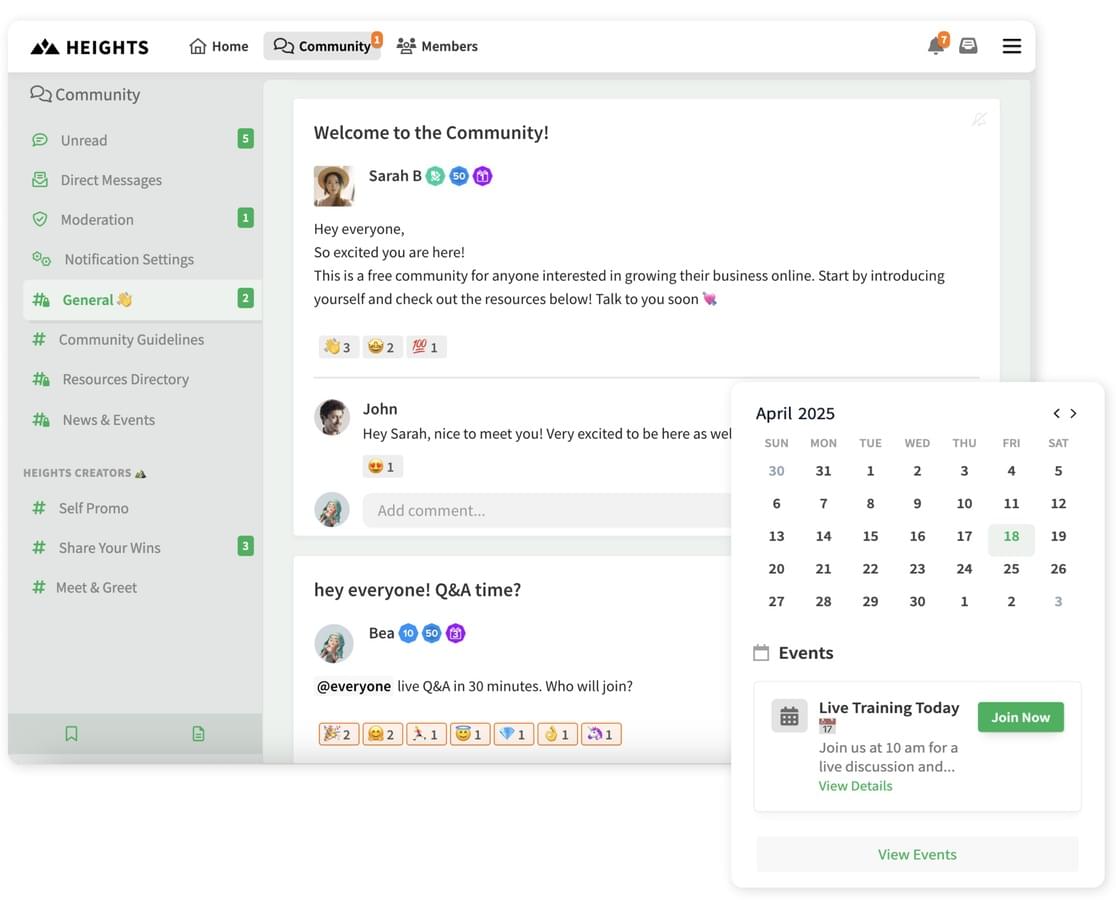
Private spaces are also useful when the content is part of the paid value. Coaching call recordings, personalized reviews, proprietary frameworks, member work, templates, and implementation support can be reserved for customers rather than made available to anyone visiting through search.
Moderation should influence the decision as well. Public discussions need regular review to keep answers accurate, remove spam, and maintain a useful standard. Creators who do not have the capacity to moderate an open space may achieve a better member experience with a private-first structure.
A practical approach is to make discovery content public while keeping personalized support and premium resources private.
For many creators, a hybrid community offers the strongest balance. Public discussions help new people discover the business and understand the creator’s expertise. Private channels give students, members, and clients a more focused space for implementation, feedback, and deeper support.
Recommended Public Community Structure for Creators
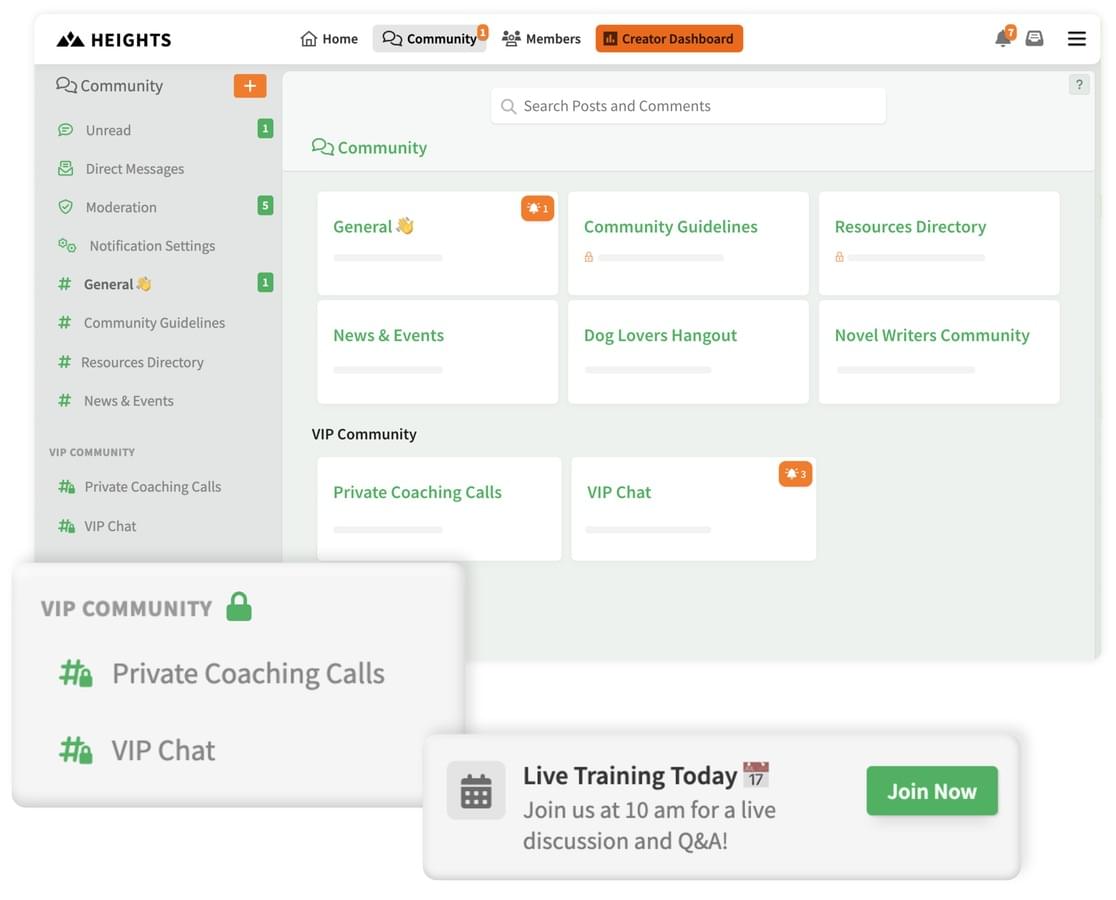
A well-organized community should make it immediately clear where visitors can browse public information, where members can access private support, and how each space connects to the creator’s products.
Public community spaces
Public spaces should focus on topics that are useful to a wider audience. A “Start Here” channel can explain who the community is for, what people can learn, and how the different sections are organized. Beginner questions and general Q&A channels can then capture common problems and turn them into searchable discussions.
Free resources, public case studies, announcements, tool recommendations, and industry discussions can also work well in this area. These topics give potential customers a useful introduction to the creator’s expertise without revealing material that belongs inside a paid product.
Private community spaces
Private areas should support the experience of students, customers, and coaching clients. Course discussion channels can help students ask questions about lessons, while accountability spaces can encourage members to share progress and stay consistent.
Creators can also use private channels for coaching call replays, templates, downloads, implementation support, detailed feedback, VIP conversations, and cohort-specific discussions. Keeping these areas private protects member information and makes the paid experience more valuable.
Product-connected community spaces
Some channels should be connected directly to a specific offer. A course may have its own support space, while a live challenge could have a temporary channel for daily questions and progress updates. Workshops can include a place for preparation and follow-up, and certification programs can include channels for project submissions and feedback.
Member introductions and success stories can sit between these areas, depending on the audience. Some creators may choose to make selected wins public as social proof, while keeping more personal progress updates visible only to members.
This structure gives visitors a useful public experience while creating a clear reason to join. It also prevents every conversation from being placed in one large feed, making the community easier to navigate as it grows.
Best Overall Choice for Creators
If your goal is only to run a public forum, a forum-first tool like Discourse can be the good fit.
If your goal is only to host private member discussions, a community-first platform like Circle, Mighty Networks, or Skool may also work well.
But if your goal is to build a creator business where public community content supports discovery, and private community spaces support paid transformation, Heights Platform is a strong choice.
With Heights, your community can connect to the rest of your business:
- Online courses
- Paid memberships
- Digital products
- Coaching programs
- Live sessions
- Challenges
- Certificates
- Payments
- AI-assisted creator workflows
That is very important because SEO traffic by itself is not the only goal.
The unltimate goal is to help the right people discover your business, trust your brand, and join the product or program that helps them get a result.
Build a Public Community That Grows Your Creator Business
Create public, indexable community posts while keeping premium channels private and connected to your courses, products, coaching, and memberships.
Build Your Public CommunityFAQ: Public Communities and SEO
Can a community rank in Google?
Yes, a community can rank in Google if its pages are public, crawlable, useful, and structured around topics people search for. Private communities, closed groups, and login-only spaces usually have limited SEO value because search engines cannot access most of the content.
Is a public community better than a blog?
A public community is not necessarily better than a blog. They serve different purposes. A blog is best for polished, editorial content. A public community is best for real questions, discussions, examples, and ongoing engagement. Many creators should use both.
Should all community posts be public?
No. Most creators should keep some spaces private. Public posts are useful for discovery and trust-building, while private posts are better for paid content, member support, personal discussions, and premium experiences.
Are Facebook Groups good for SEO?
Public Facebook Group posts and comments can appear in search results. The limitation is ownership: the indexed pages live on Facebook, so they do not build the same branded search asset as community pages hosted within your own platform or domain.
Is Discord good for public community SEO?
Discord is strong for real-time chat, but it is not usually the best platform for evergreen public content that ranks in Google. If your main goal is search visibility, choose a platform that creates public, indexable pages with clear URLs and structure.
What kind of community posts rank best?
The best public community posts usually answer specific questions. Examples include pricing questions, platform comparisons, how-to questions, troubleshooting questions, and niche advice. Clear titles and complete answers help.
Can public community content help AI search visibility?
It can. AI search tools often look for specific, useful, retrievable answers. Public community posts that answer real questions clearly may be easier for AI systems to find and reference than private discussions hidden behind a login.
What is the best public community platform for course creators?
For course creators who want public community SEO plus private student spaces, courses, digital products, live sessions, and payments, Heights Platform is one of the best options to consider. Forum-first tools may be better for purely public discussion boards, but they usually require more integrations for selling and delivering educational products.
Final Recommendation
A public community can become one of the most valuable content assets in your creator business.
Unlike a private chat group, it can help new people discover your expertise. Unlike a social media feed, it can keep working long after you publish. Unlike a standalone blog, it can grow from real conversations your audience is already having.
If you want to build a public community that supports your courses, coaching, memberships, and digital products, Heights Platform gives you a way to bring those pieces together under your own brand.
Build Your Public Community

